Sustainability
Beyond Sustainable: Unlocking Nigeria's Soil Potential with Regenerative Agriculture
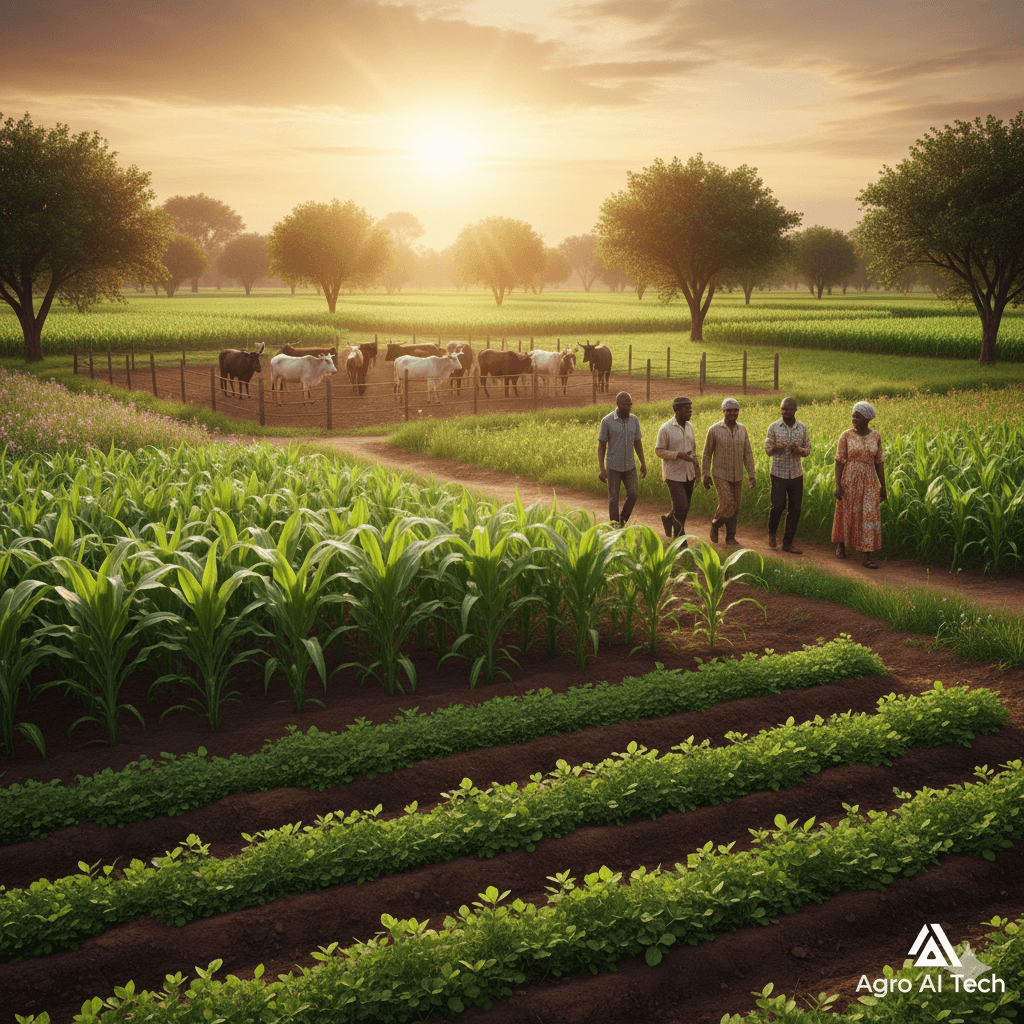
In the world of farming, "sustainable" is a term we hear often. But what if we could go beyond just sustaining and actually regenerate our land? This is the core promise of Regenerative Agriculture – a holistic approach to farming that doesn't just reduce environmental harm, but actively rebuilds soil health, increases biodiversity, and creates resilient ecosystems. For Nigeria, with its vast agricultural lands and the critical need for long-term food security, understanding and adopting regenerative practices is more important than ever.
At AgroAITech Ltd, we believe that demystifying regenerative agriculture is key to empowering Nigerian farmers to heal their land, produce healthier food, and build a more prosperous future.
What Exactly is Regenerative Agriculture?
Regenerative agriculture is a system of farming principles and practices that aims to reverse climate change by rebuilding soil organic matter and restoring degraded soil biodiversity. It focuses on drawing carbon from the atmosphere and storing it in the soil, improving the water cycle, and enhancing ecosystem services. It's about seeing the farm not just as a production unit, but as a living, interconnected ecosystem.
Core Principles of Regenerative Agriculture:
1. Minimizing Soil Disturbance (No-Till/Reduced-Till):
-Principle: Frequent plowing and tilling break up soil structure, release carbon, and harm beneficial soil microbes.
-Practice: Adopt no-till or reduced-till farming, where crops are planted directly into undisturbed soil. This protects the soil's structure and the vast underground "life" that keeps it healthy.
2. Maximizing Soil Cover:
-Principle: Bare soil is vulnerable to erosion by wind and water, and loses moisture rapidly.
-Practice: Keep the soil covered as much as possible, either with cash crops, cover crops (e.g., legumes like cowpea, lablab), or crop residues. This acts like a protective blanket, retaining moisture, suppressing weeds, and feeding soil organisms.
3. Increasing Biodiversity:
-Principle: A monoculture (growing only one type of crop) depletes soil nutrients and creates vulnerability to pests and diseases. Rich biodiversity above and below ground creates a more resilient system.
-Practice: Implement diverse crop rotations, intercropping (growing multiple crops together), and agroforestry (integrating trees with crops and livestock). Encourage beneficial insects and microorganisms.
4. Integrating Livestock (Holistic Grazing):
--Principle: Properly managed livestock can be a powerful tool for soil health, mimicking natural grazing patterns.
-Practice: Rotate livestock through pastures (e.g., cattle, goats, sheep common in Nigeria) in a controlled manner, allowing adequate rest for vegetation. Their grazing stimulates plant growth, and their manure naturally fertilizes the soil.
The Benefits for Nigeria:
Implementing these principles can bring revolutionary changes to Nigerian agriculture:
1. Improved Soil Health & Fertility: Leads to richer, more nutrient-dense soils, reducing reliance on expensive chemical fertilizers.
2. Enhanced Water Retention: Healthier soil acts like a sponge, holding more water and making farms more resilient to drought, which is vital for arid regions.
3. Increased Biodiversity: A thriving ecosystem above and below ground leads to natural pest control and healthier crops.
4. Climate Change Mitigation: Sequestering carbon in the soil actively helps combat climate change.
5. Reduced Costs & Increased Profitability: Less need for tillage, synthetic fertilizers, and pesticides translates to significant cost savings for farmers.
6. Long-term Food Security: Building resilient, productive land ensures food production for future generations.
AgroAITech Ltd: Your Partner in Regeneration
Adopting regenerative agriculture is a journey, not an overnight switch. It requires knowledge, careful planning, and sometimes, new tools. AgroAITech Ltd is committed to supporting Nigerian farmers in this vital transition by providing:
1. Knowledge & Training: Workshops and resources on no-till techniques, cover cropping, and holistic livestock management.
2. Appropriate Technology: Tools that facilitate regenerative practices, such as precision planters for no-till or smart monitoring for grazing.
3. Data-Driven Insights: Helping farmers track their soil health improvements and optimize their regenerative strategies.
Regenerative agriculture isn't just a trend; it's a profound shift towards a healthier planet and a more secure food future for Nigeria. Let's work together to regenerate our lands and nourish our nation, one healthy soil at a time.