
Technology
Precision on the Plate: How AI is Slashing Feed Costs and Boosting Livestock Health in Nigeria
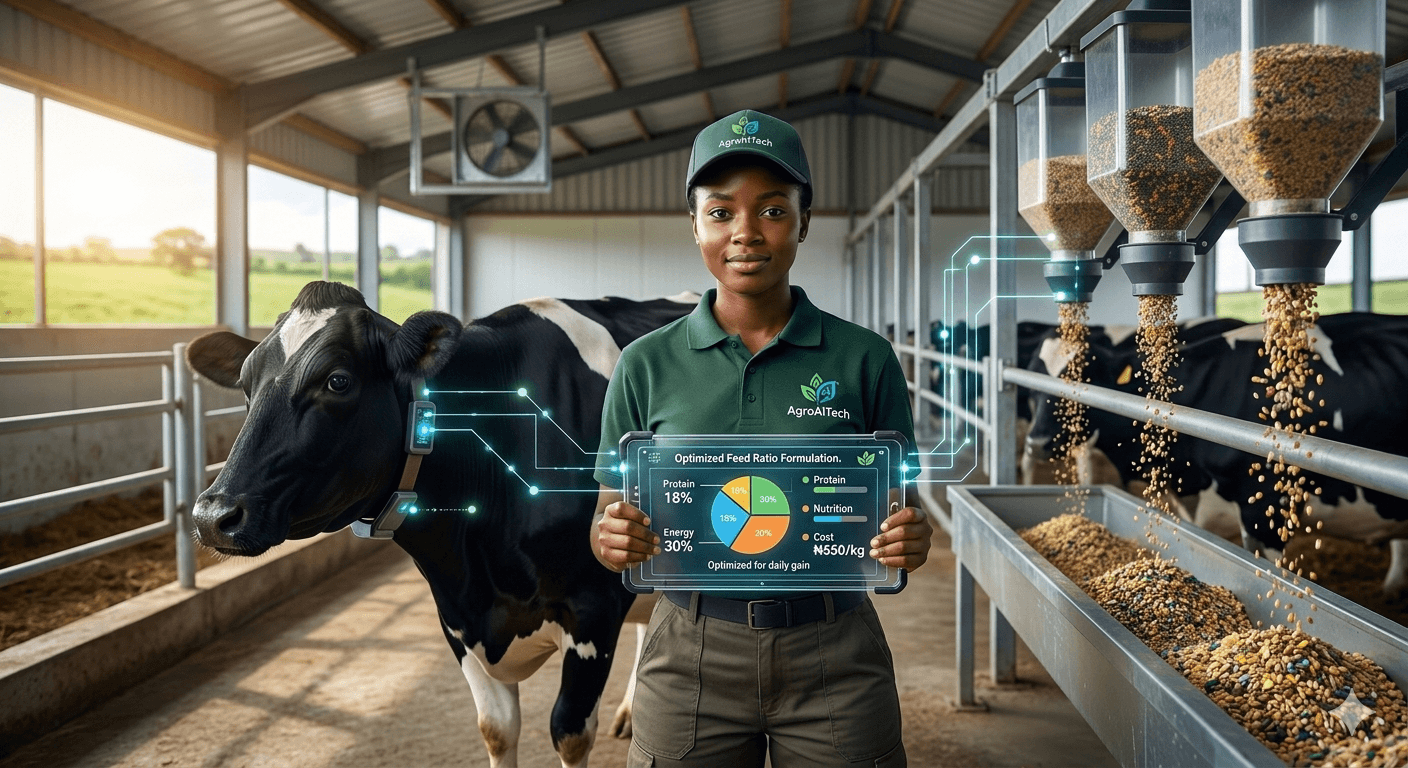
For any livestock farmer in Nigeria—whether you are raising broilers in Ogun or managing a dairy herd near Kaduna—one reality dominates the ledger: Feed is the single largest cost. It often accounts for 60-80% of total production expenses.
In 2026, managing these costs manually using simple blending tables is no longer sustainable. Nutrient requirements vary wildly based on breed, age, and production goals. Meanwhile, the market price of maize, soybeans, and alternative ingredients fluctuates daily due to logistical challenges and FX rates.
This is where Artificial Intelligence (AI) ceases to be a futuristic concept and becomes an essential tool for farm profitability. AI is revolutionizing livestock nutrition through Least-Cost Ration Formulation (LCRF) on steroids.
The Problem with Traditional Blending
When farmers manually calculate feed mixes, they usually prioritize one of two things:
Fixed Recipe: Blending the same mix regardless of ingredient price changes, leading to financial losses when grain prices spike.
Imprecise Nutrient Targeting: Meeting the minimum protein needs but oversupplying or undersupplying other vital amino acids or minerals, which hurts animal growth and wastes expensive nutrients.
How AI Optimizes the Ration
AI algorithms, running on modern farm management platforms or accessible via simple apps, tackle this complexity by acting as a super-nutritionist and an expert accountant simultaneously.
The Input Data:
The farmer inputs data into the AI system:
Animal Data: Breed (e.g., Shika-Brown layers vs. imported broilers), Age/Weight, Health Status, and Production Goals (e.g., target eggs per day or target slaughter weight).
Ingredient Data: Current local market prices of maize, soybean meal, groundnut cake, cassava peel, etc., along with the laboratory-tested or standard nutrient profiles of those specific batches.
The AI Process:
The AI analyzes millions of possible blending combinations to find the statistical sweet spot. It ensures that the required levels of lysine, methionine, energy, and calcium are met exactly to match the animals' genetic potential, while mathematically selecting the cheapest combination of ingredients available today.
The Triple Benefit for Nigerian Farmers
1. Lower Feed Expenses (Reduced 10-15%)
By precisely hitting nutrient targets and substituting expensive ingredients with cheaper, nutritionally equivalent alternatives (like properly processed cassava peels), AI can significantly reduce the overall cost per kilogram of feed without sacrificing quality.
2. Improved Animal Health and Immunity
When animals receive precisely what they need, their immune systems are stronger. This leads to lower mortality rates and a reduced need for expensive antibiotics, improving overall food safety.
3. Better Growth and Production
Broilers hit slaughter weight faster, and layers produce more eggs with stronger shells. Precision nutrition ensures that nutrients go toward growth and production, rather than being excreted as wasted nitrogen, which also reduces the environmental footprint of the farm.
Conclusion
As Nigeria pushes toward food security, the intersection of data science and agriculture is vital. AI-driven feed optimization allows farmers to move from survival to scalability, ensuring healthy animals and a healthy bottom line.